Center for Holocaust, Genocide & Human Rights Studies
2026 events
Mission Statement & Activities
During World War II, the Nazi empire and its allies systematically murdered nearly six million Jews, with the goal of making its entire realm “clean of Jews,” to use the Nazis’ ugly terminology. Driven by a philosophy that prioritized antisemitism but that dehumanized other peoples as well, the Nazi Holocaust claimed millions of additional victims: Soviet soldiers and civilians, Poles, Roma and Sinti, disabled people, Black Germans and other African-descended peoples, gay men, and religious and political dissidents.
As the Holocaust became known to the postwar world, interest was sparked in the “crime without a name”: the attempt to eradicate an entire group of people. Contemplating this particularly sinister crime, Polish legal scholar Raphael Lemkin — who lost many family members to the Holocaust and was also deeply troubled by the Armenian Genocide, which had unfolded during the First World War — coined the term “genocide” in 1943, and it was adopted by a UN convention five years later. “The word is new, the concept is ancient” wrote Leo Kuper, a pioneer in the study of genocide studies in the 1980s: The Holocaust was the most recent but neither the first nor the last such episode.
Genocide cannot always be easily distinguished from other crimes against humanity and human-rights abuses. Post-WWII atrocities in Cambodia, East Timor, Guatemala, Bosnia, Rwanda, Sudan, Gaza, and elsewhere were widely reported, but little understood — much less prevented. The repeated occurrence of genocide and the violation of fundamental human rights makes discussion, investigation, and prevention ever more urgent.
The Center for HGHR Studies advances both an academic and a public mission. The Center organizes scholarly exchange as well as community activities in order to promote research, education, dialogue, and action on the human proclivity to divide the world according to an “us versus them” mentality and to demonize and fear “the other,” whether perceived by ethnicity, nationality, religion, gender, or sexuality. This Center mobilizes the intellectual resources of faculty and students from multiple departments and from the community to address the social, behavioral, and cultural origins of genocide and mass violence and to better understand their consequences and legacies.
Through the Dept. of Global Studies, we offer a minor in Holocaust, Genocide, and Human Rights Studies (HGHR).
Since our founding in 2011, the Center for HGHR Studies has:
- Organized or co-sponsored more than 100 events on campus and in the community.
- Brought to Charlotte such renowned scholars, educators, and activists as Christopher Browning, Omer Bartov, Tina M. Campt, Cynthia Enloe, John K. Roth, Sabine Cadeau, Carl Wilkens, James Waller, Barry Trachtenberg, Samantha Power, Zoé Samudzi, Adam Jones, Susan Stein, Henry Theriault, and Timothy Lovelace.
- Organized a hugely successful international conference, “Denial: The Final Stage of Genocide.”
- Worked closely with Charlotte’s large Bosniak community to host many events, including an art exhibit.
- Organized Study Abroad programs to Auschwitz, Berlin, and Krakow — and, beginning in 2028, to Bosnia.
- Collaborated with the College of Arts + Architecture on a handful of musical and theatrical productions.
- Contributed to the field of Genocide Studies through our research and publications.
2025 events
Tuesday, November 4, 2025 / 5:00 – 6:30 PM / Rowe 161
The End of Antisemitism
How the Fight Against Antisemitism Became a Tool of Political Repression
Prof. Barry Trachtenberg shows how the term “antisemitism,” once a descriptor of a distinct modern hatred, has been so weaponized by Israel’s defenders and their allies that it now obscures real threats to Jews while serving as a tool of repression against Palestinians, dissenters, and democratic institutions.
Barry Trachtenberg serves on the Academic Council of Jewish Voice for Peace and the Advisory Board of the Institute for the Critical Study of Zionism. He is a historian of modern European and American Jewry, and the author of three books, The Holocaust and the Exile of Yiddish (Rutgers, 2022); The United States and the Nazi Holocaust: Race, Refuge, and Remembrance (Bloomsbury, 2018); and The Revolutionary Roots of Modern Yiddish, 1903-1917 (Syracuse University Press, 2008).
He holds the Rubin Presidential Chair of Jewish History at Wake Forest University in North Carolina, United States.
His writings on Zionism, antisemitism, and US support for Israel have appeared in many publications and media in many languages. In 2017, he testified to the US Congress on the topic of antisemitism on college and university classrooms.
In January of 2024, he testified in the lawsuit filed by the Center for Constitutional Rights against the Biden White House seeking an emergency order to stop military and diplomatic support for Israeli government’s genocidal assault on Gaza.
March 18, 2025
4:30 pm
Fretwell 100
Marina Sitrin
Remaking Justice: Global Alternatives to Policing and Prisons
What if we abolished police, courts, and prisons? Where would we turn for justice? Do we need to have punishment? These questions are not just the preoccupation of abolitionist theorists. Their answers exist already if only we know where to look….
Communities and groups resolving conflicts and harms themselves — without looking to the state or judiciary — is not, in and of itself, something new. The scale to which this is currently occurring, however, and the diversity in geographies and processes, is.
This presentation will explore a number of locations from around the world where alternative forms of justice, policing/peacekeeping, and adjudication are taking place.
Marina Sitrin is an Associate Professor in the department of Sociology at SUNY Binghamton. She is the co-author of They Can’t Represent US: Reinventing Democracy from Greece to Occupy (Verso 2014); Occupying Language the Secret Rendezvous with History and the Present (Zuccotti Park Press 2012); author of Everyday Revolutions: Horizontalism and Autonomy in Argentina (Zed 2012); and Global Societies in Movement (Palgrave MacMillian, forthcoming). Her forthcoming book We Make Our Own Justice: Beyond Police and Prisons examines experiences of alternative forms of adjudication, grounded in movement and community experiences, from Argentina and Mexico to Rojava (NE Syria) to Kenya.
Sponsored by the Center for Holocaust, Genocide & Human Rights Studies, the Department of Global Studies, the Department of Criminal Justice and Criminology, and the Free Expression and Constructive Dialogue Task Force.
—————————————————–
Spring 2024 events
March 21 | Cameron Hall 101 | 1:00-2:15 pm
Carl Wilkens, “a disobedient American citizen in the service of good in Rwanda” and a rescuer
“‘The only American in Kigali during the genocide.’ This is how Carl Wilkens is described. Few years after he and his family moved to Rwanda, where he served as director of the agency in the country, the plane carrying President Habyarimana was shot down, triggering the genocide against the Tutsi. It was the night between 6th and 7th April 1994.
Carl remembers those early days, when he and his wife and their three young children stayed indoors listening to the radio and trying to get in touch with local authorities and UN soldiers, but the only voice coming through the transmitter was the one announcing the death toll, the massacres. “One day, they were saying on the radio that right there, in our district, people had been killed. I suddenly looked up and saw my children. Petrified by that horror”.
On 10th April, the United Nations ordered the evacuation of all foreign nationals in the country. Carl made sure his loved ones were taken to safety, but decided to stay. US diplomat Laura Lane, then a political security officer at the US embassy in Kigali, recalls his words: “Laura, there are people here who depend on me. I cannot leave”.’
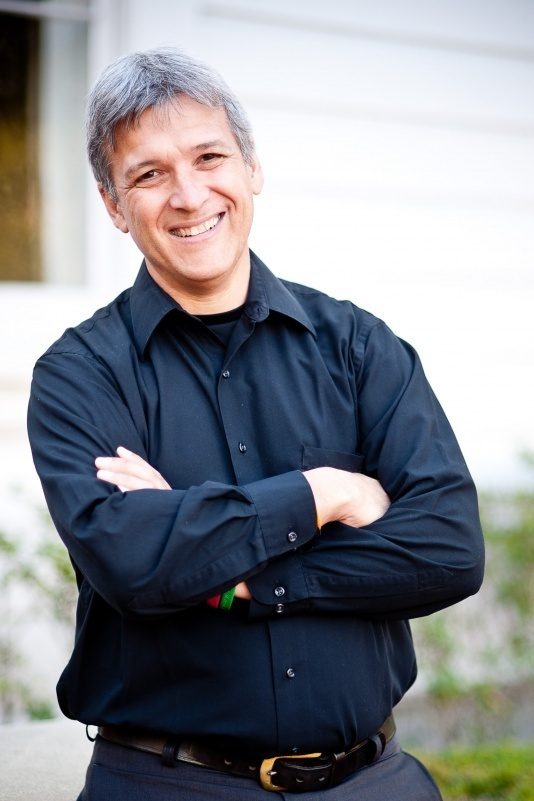
April 18 | Atkins Library, Halton Reading Room | 11:30am – 12:45 pm
Dr. Sabine Cadeau speaks on her new book, Bonds and Bondage: Financial Capitalism and the Legacies of Atlantic Slavery at the University of Cambridge.
It is a study — with broad implications — of the University of Cambridge’s multiple relationships with slave trading companies such as the East India Company, The Royal African Company, and especially the South Sea Company. This book illustrates the ways in which the University of Cambridge accumulated wealth from Atlantic Slavery through colonial financial instruments. Through this study she demonstrates that the University of Cambridge benefitted economically from enslavement at multiple levels and was transformed by the colonial capitalism of the early modern era in multiple highly visible ways.
Her first book, More Than a Massacre: Racial Violence and Citizenship in the Haitian-Dominican borderlands, was published by the University of Cambridge Press Afro-Latin America series. The book traces a successively worsening campaign of explicitly racialized anti-Haitian repression that began in 1919 under the American occupiers, accelerated in 1930, with the rise of the dictator Trujillo, and culminated in 1937 with the slaughter of an estimated twenty thousand civilians.